Structure
Structural form-finding with Finite Element Analysis (FEA) — from lattice-cell studies and a brick stress test to a fully optimised recycled-PET beach pavilion.
- Alpaca4D FEA on lattice cells, a brick stress shell & a GF-rPET pavilion
- Sine-mapped form filled with a Crystallon cell lattice
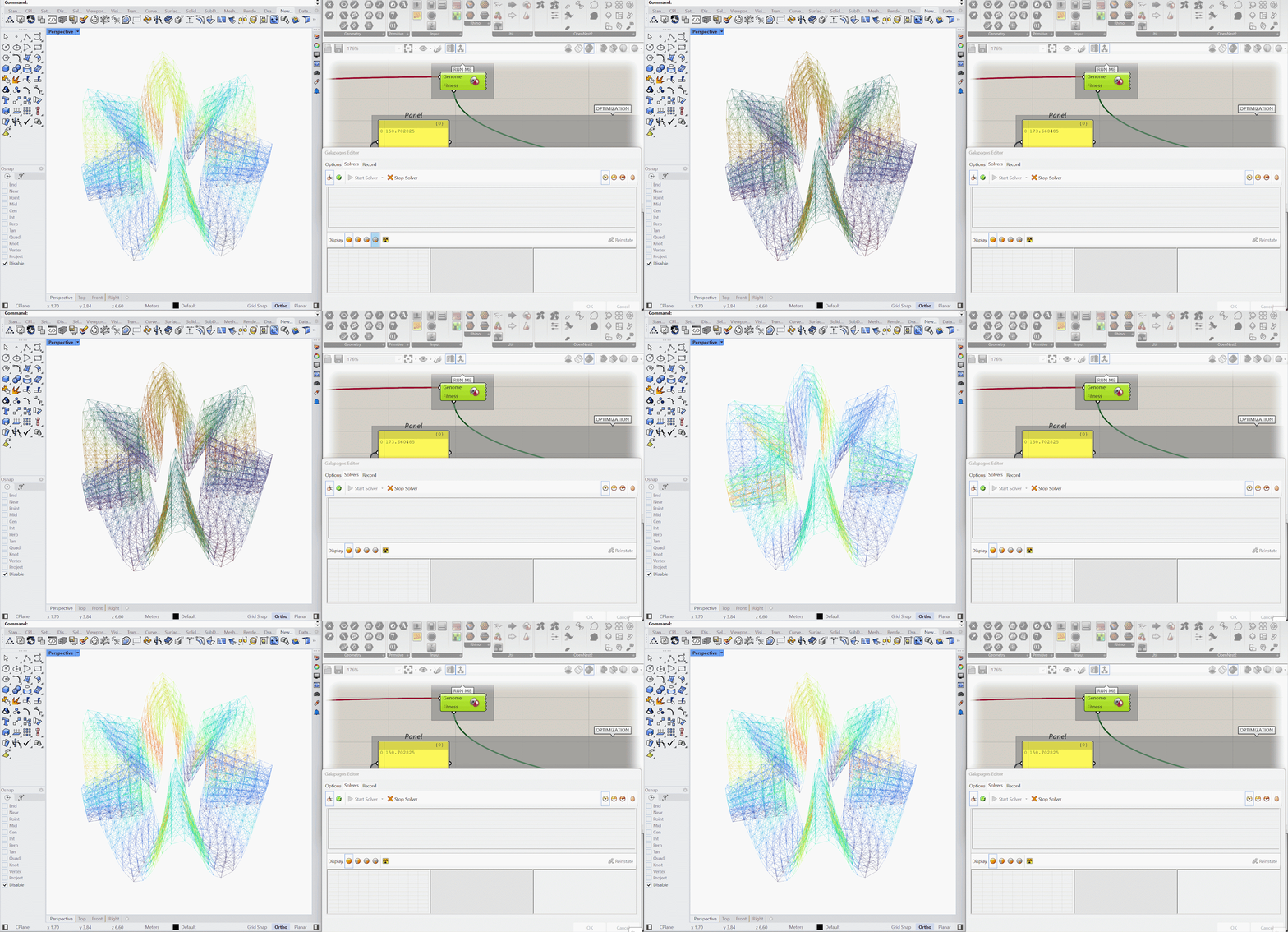
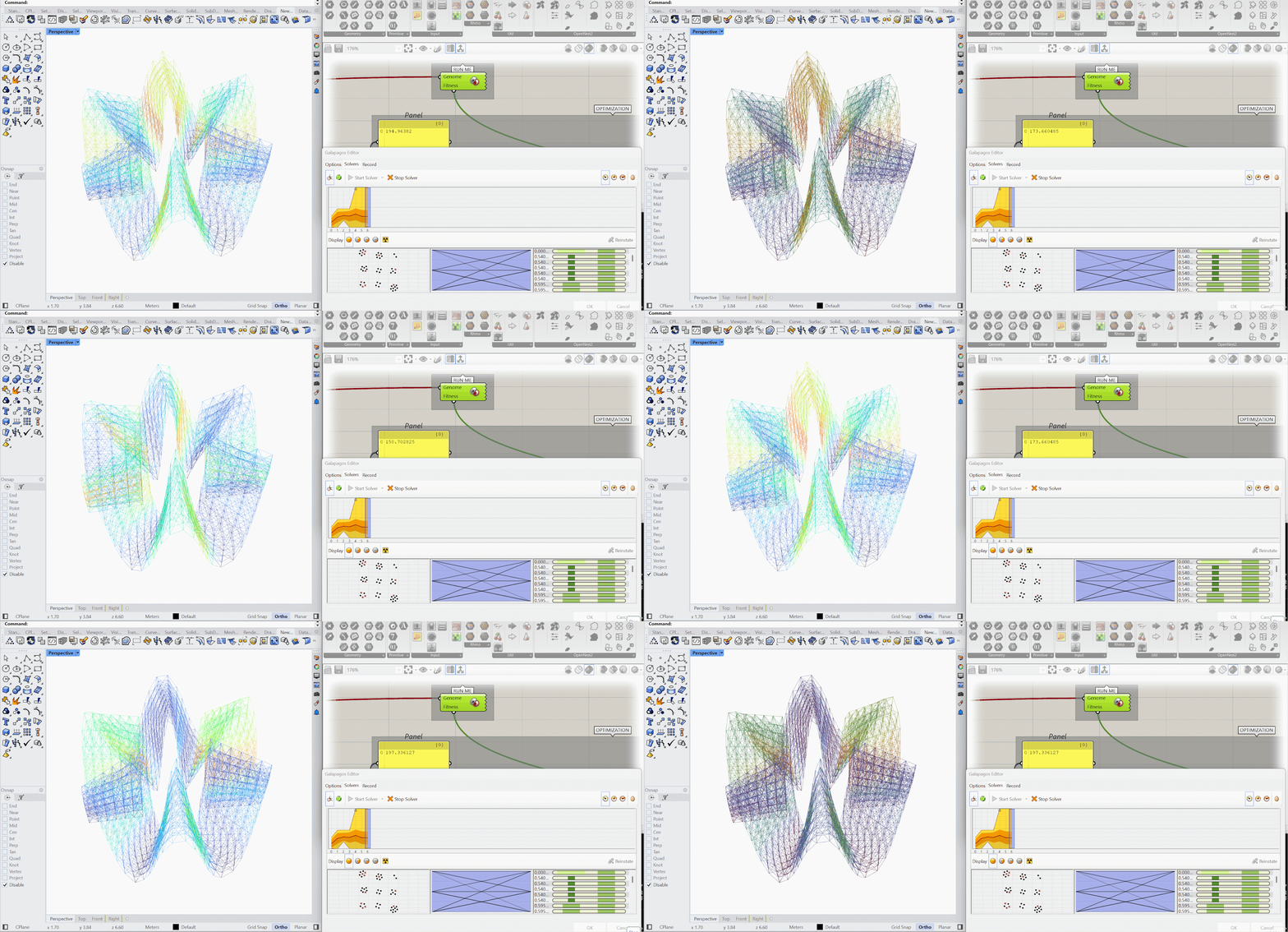
- Galapagos optimisation cut deflection 0.246 → 0.104 mm
Alpaca4D — Finite-Element Form-Finding
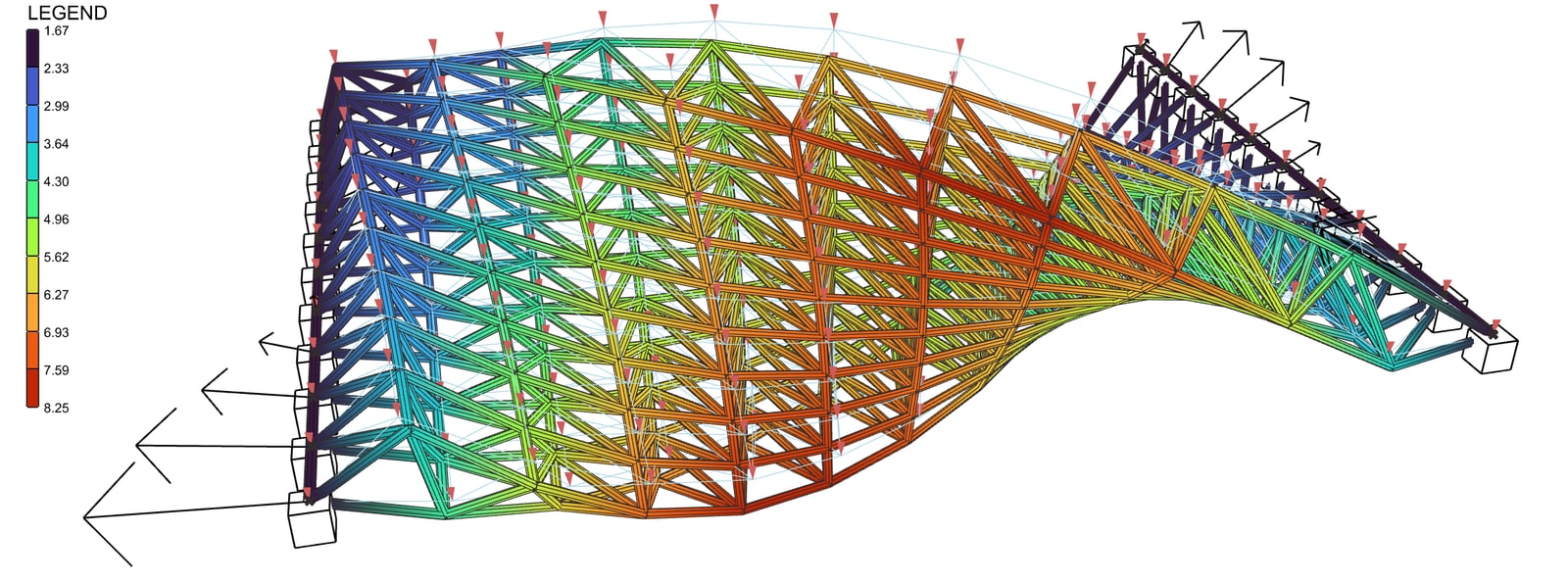
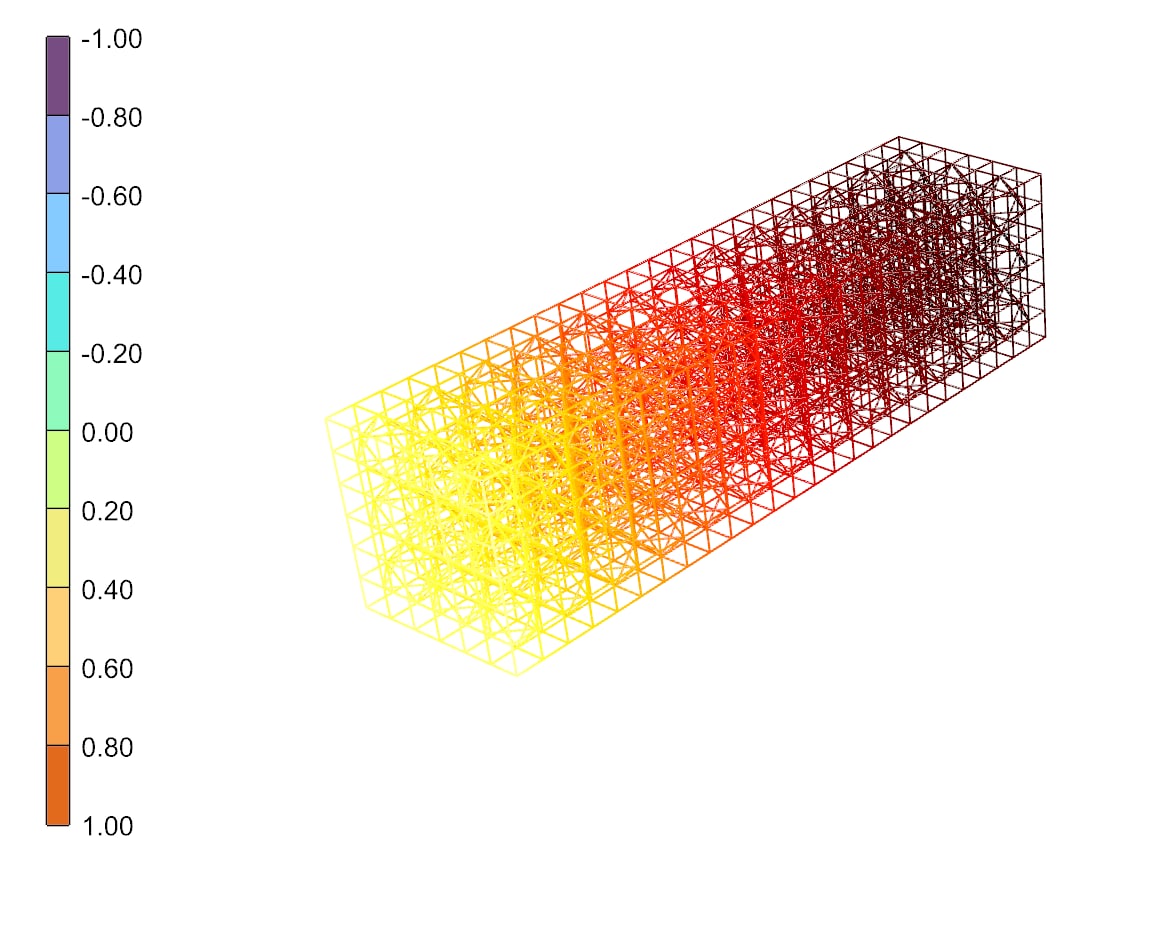
Alpaca4D brings Finite Element Analysis (FEA) directly into Grasshopper — a structure is meshed, given a material and section, loaded, and solved for displacement and stress inside the parametric model. The study explores a family of space-filling lattice cells — edge-octet, vertex-octet and truncated-octahedron — each turned into a load-bearing frame. Colour gradients map the axial-force, deflection and stress results across the geometry, so the structural behaviour of every cell type can be read at a glance and compared before committing to a form.
 Axial force gradient
 Edge-octet cell
Brick Stress Study
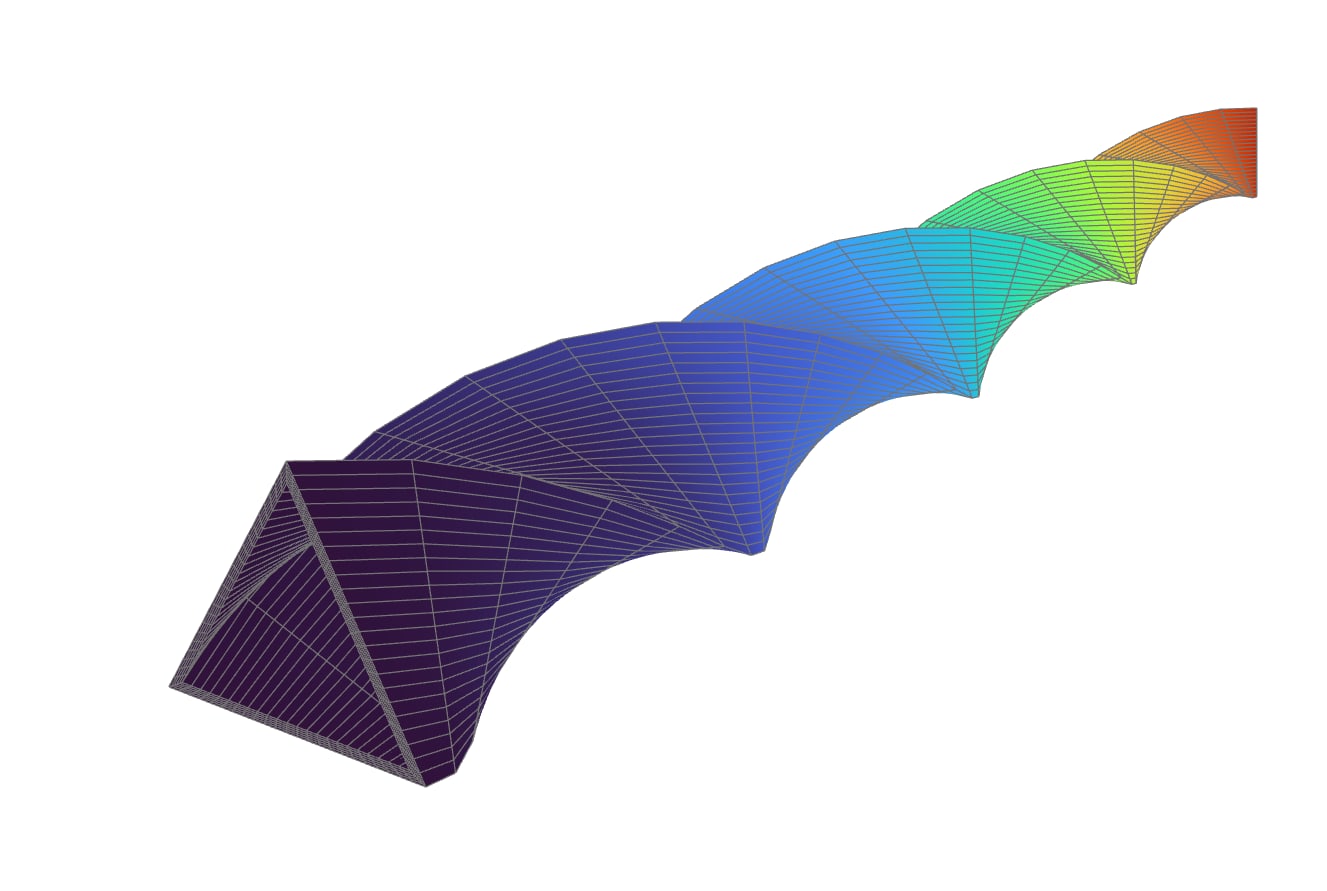
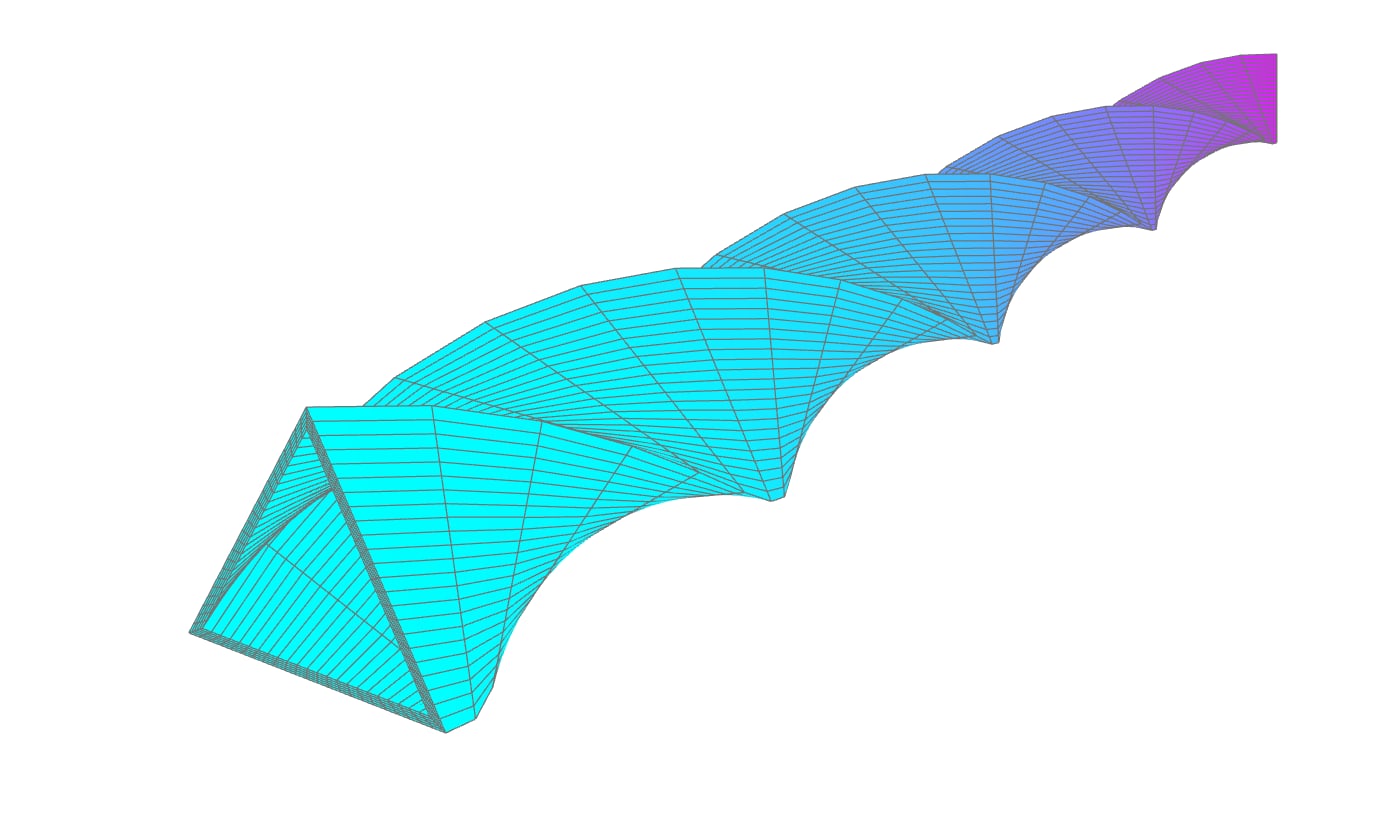
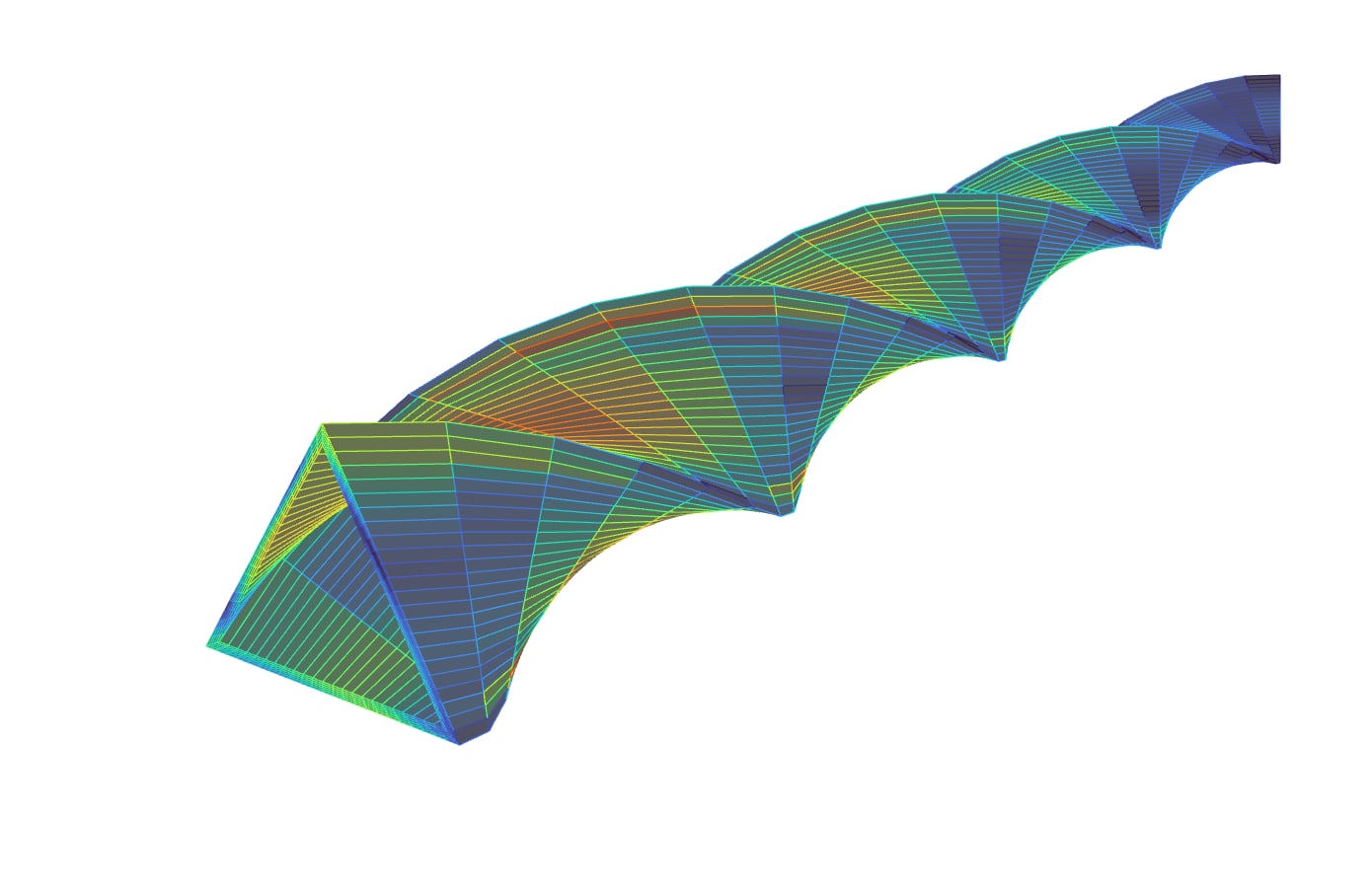
Using the same Alpaca4D workflow, a doubly-curved brick-cell surface is tested as a structural shell. The mesh is loaded under gravity and the solver returns a deformed model — the tween-through-colour gradient runs from blue (least stressed) to red (most stressed), tracing exactly where load concentrates along the ridges and where the surface deflects most. Reading the deformation and stress fields together drives the placement of material: the pattern shows which zones need reinforcement and which can be lightened, feeding straight into the pavilion's optimisation.
Beach Pavilion — Recycled PET
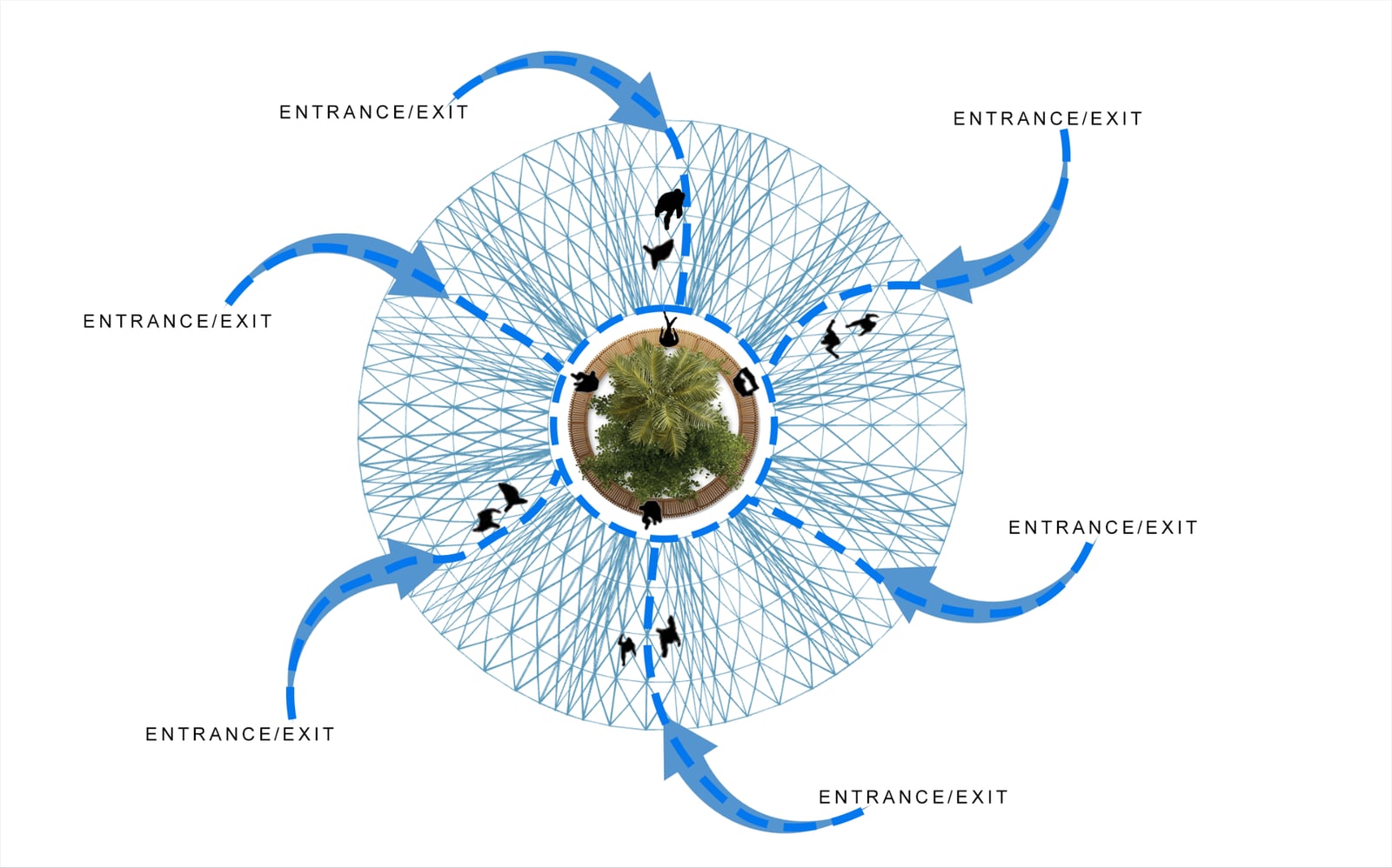
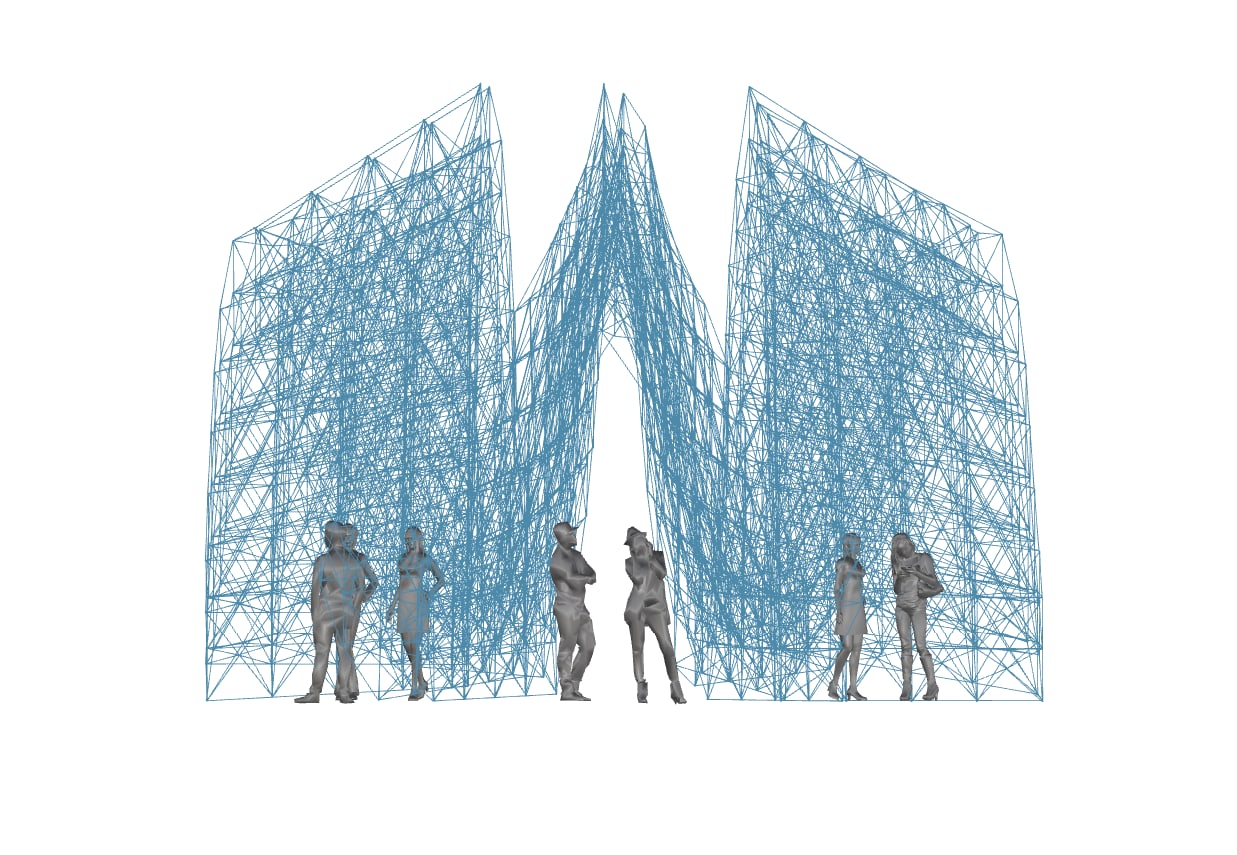
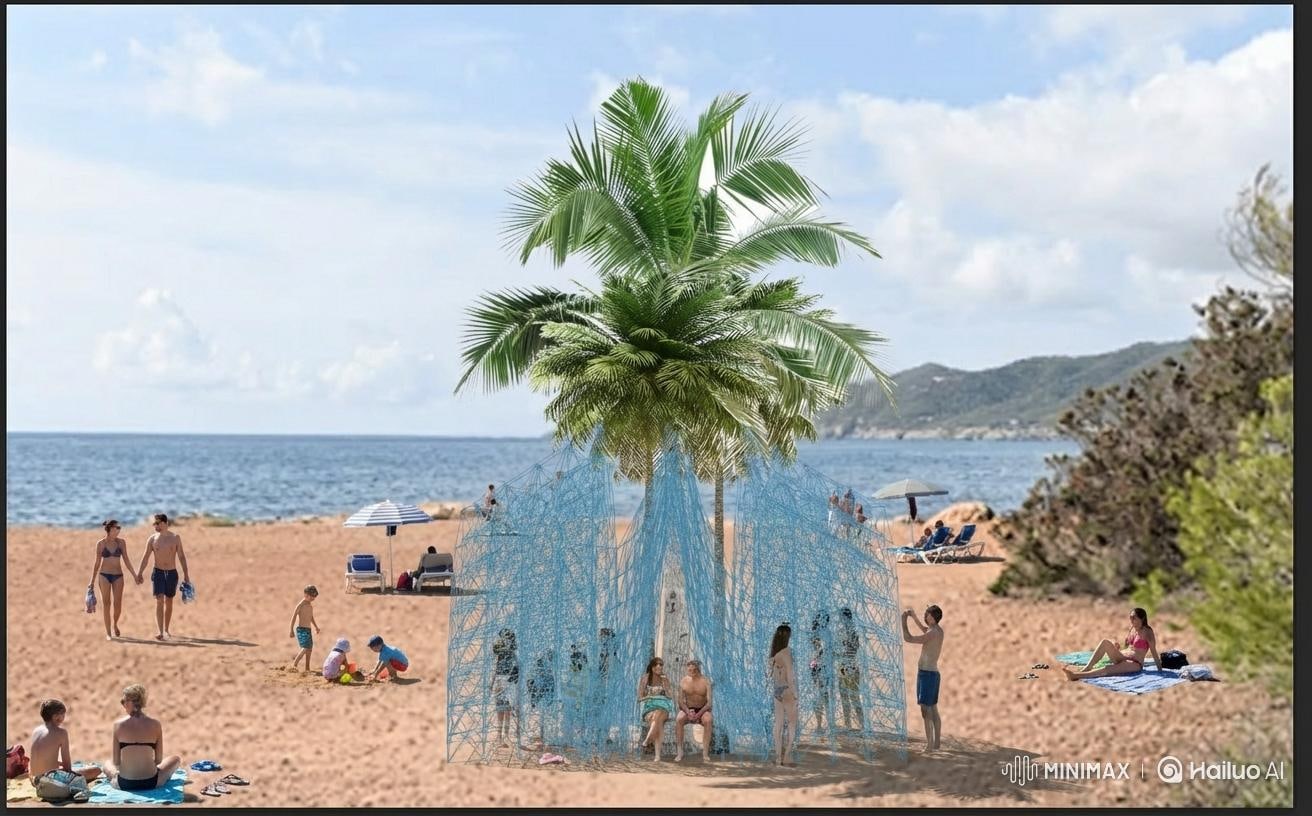
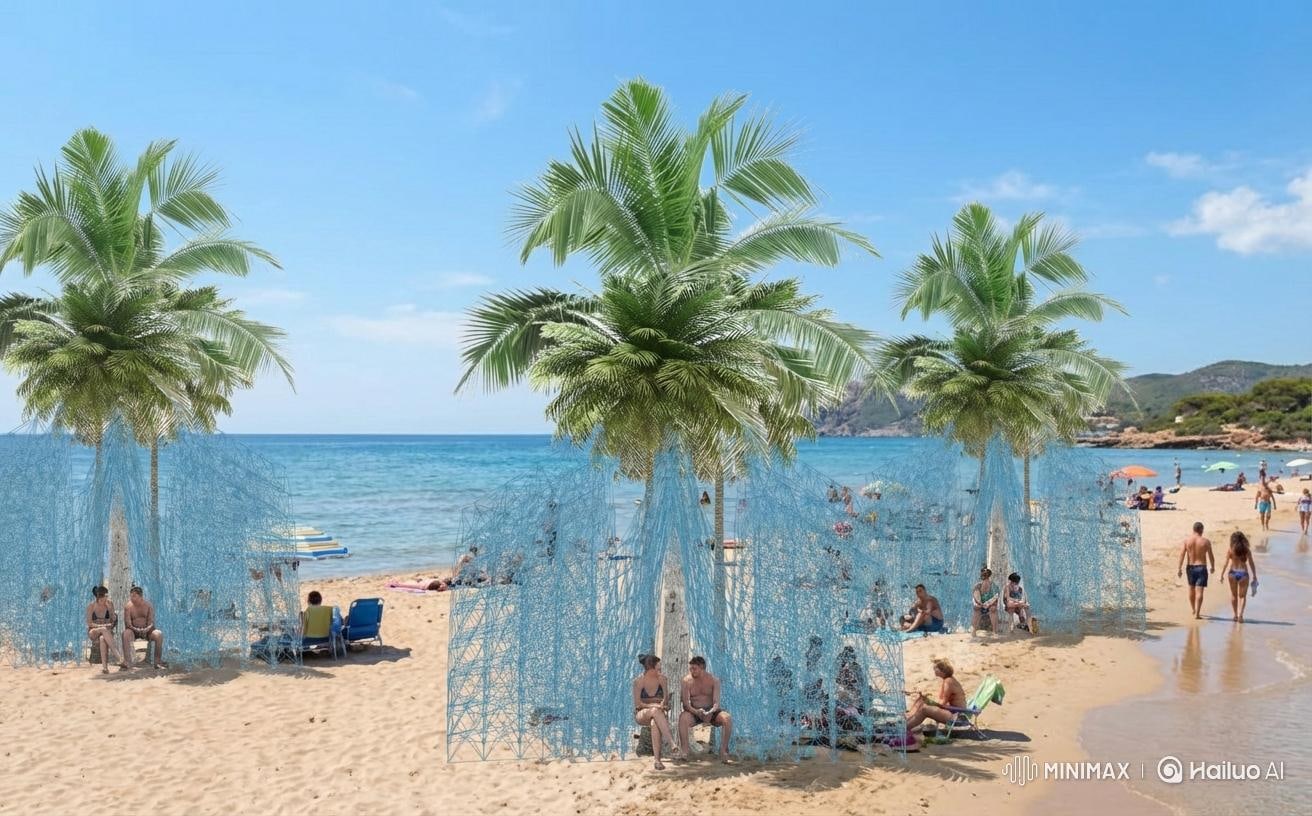
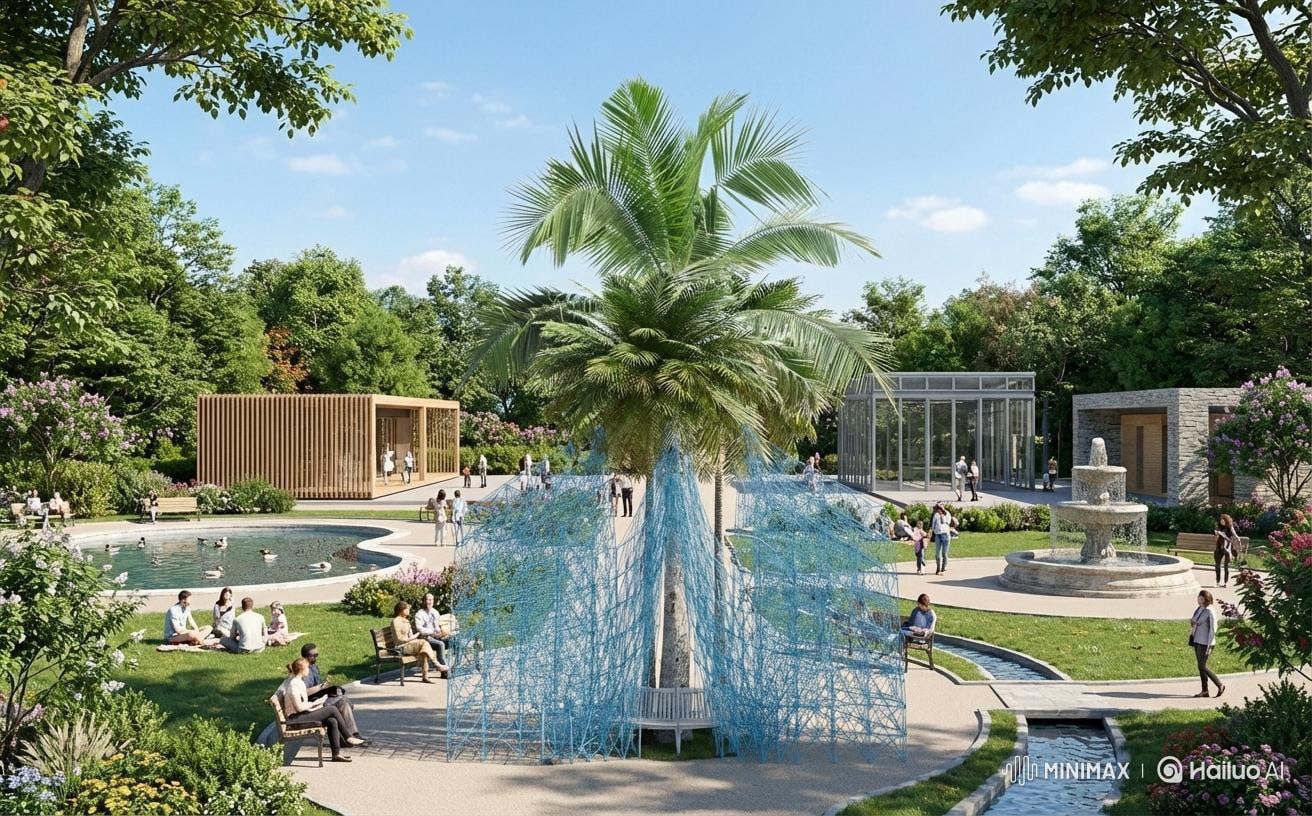
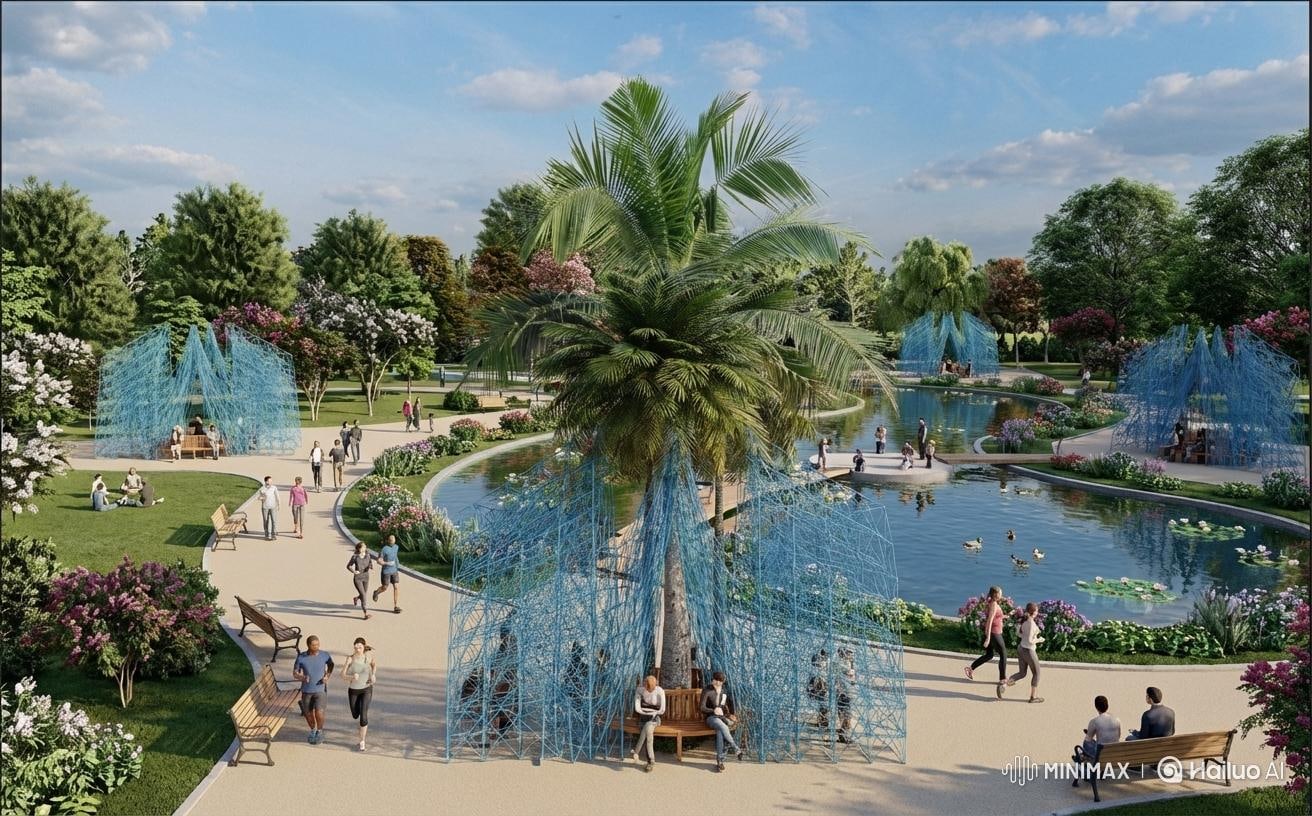
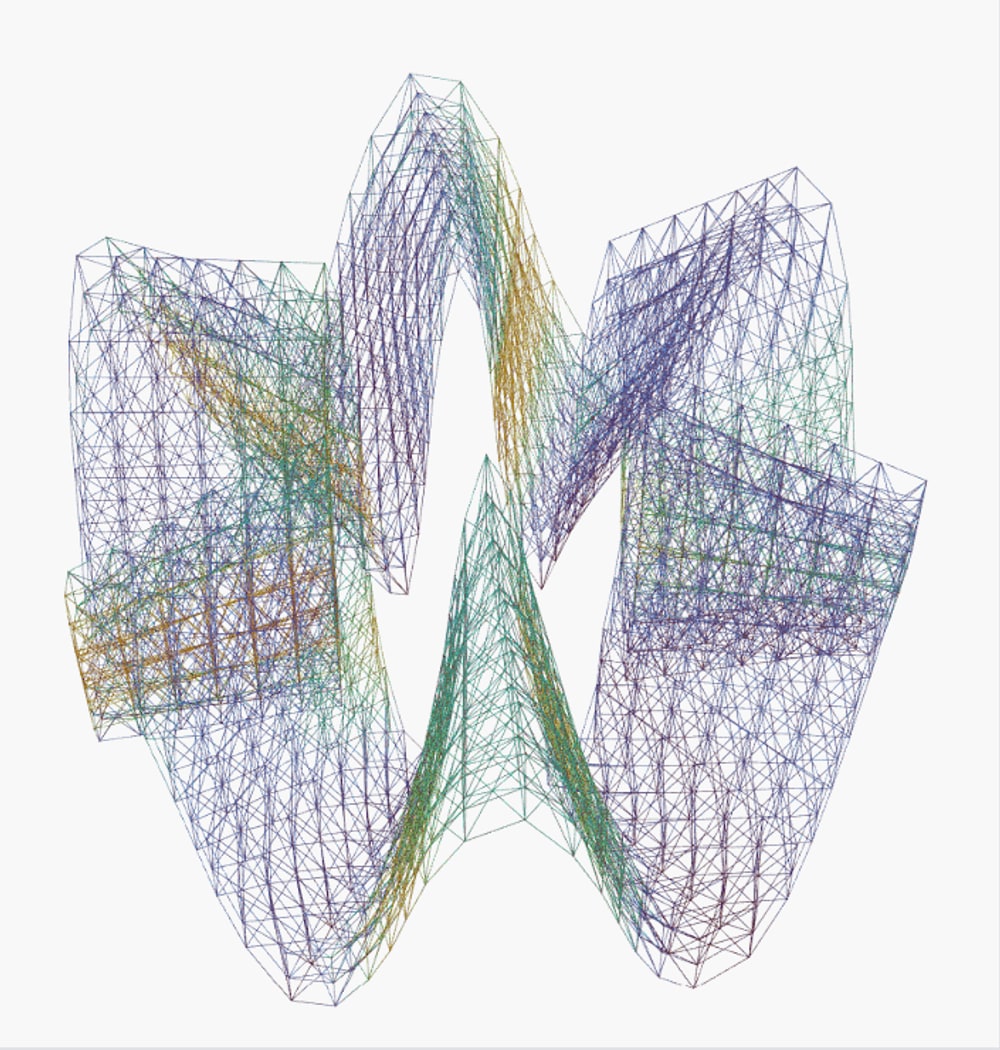
A temporary, fully recyclable beach pavilion designed to fill an 8 × 8 × 6 m envelope with a clear circulation core. The form is derived by mapping a sine graph across concentric circles, interpolating the curves into a ruled surface, then filling it with a Crystallon cell lattice. Built from GF-rPET rod elements (5 mm circular section, Young's modulus 9.47 × 10⁶ kg/m², density 1710 kg/m³) fixed at the base, it is solved in Alpaca4D under gravity and a 0.08 kN/m² wind load. Galapagos then optimises the lattice "boost" for minimum mass within a strict deflection limit — driving deflection from 0.246 mm (boost 2) down to 0.104 mm (boost 5) at 151.8 kg. Final views were generated with Twinmotion and Hailuo AI.